Information for the press
The data stays, the question travels to the data, and only the answer goes out.
European patent pending. Company being incorporated. Everything on this page may be quoted.
In one paragraph
Your data stays where it is, the question travels to it, the algorithm runs on the spot, and only the answer leaves.
That answer carries a signed label recording where it came from, what it may be used for, and how long it stays valid. Two parties can therefore reach a shared answer on data they will never hand each other.
The problem
People have been talking about a market for data for twenty years, and that market does not exist. A copy costs nothing and cannot be told apart from the original, so there is never a shortage and therefore never a price.
You pay for services with your data and get nothing measurable back. Companies have the mirror image of the same problem: they need each other's data to answer a question, and they cannot hand it over.
The working of the ecosystem
- The data stays put.It does not leave the place where it sits, at any moment.
- Only validated algorithms may run.A separate foundation tests and admits every algorithm beforehand. If it is not on the list, it runs nowhere.
- The answer leaves with a label.Provenance, permitted use and a validity period, all three under a single signature.
- The recipient checks before it acts.If the signature does not verify, or the period has expired, the action does not begin.
Three examples
The electricity grid laid one socket, and thousands of others built appliances for it. Freehold wants to be that layer for data.
Three banks together establish whether a payment is suspicious, without any one of them seeing another's customer file.
A hospital and a research group reach an answer about a treatment while the patient records never leave the hospital.
A machine builder warns an owner that servicing is due without taking possession of that factory's production data.
The boundaries of the proposition
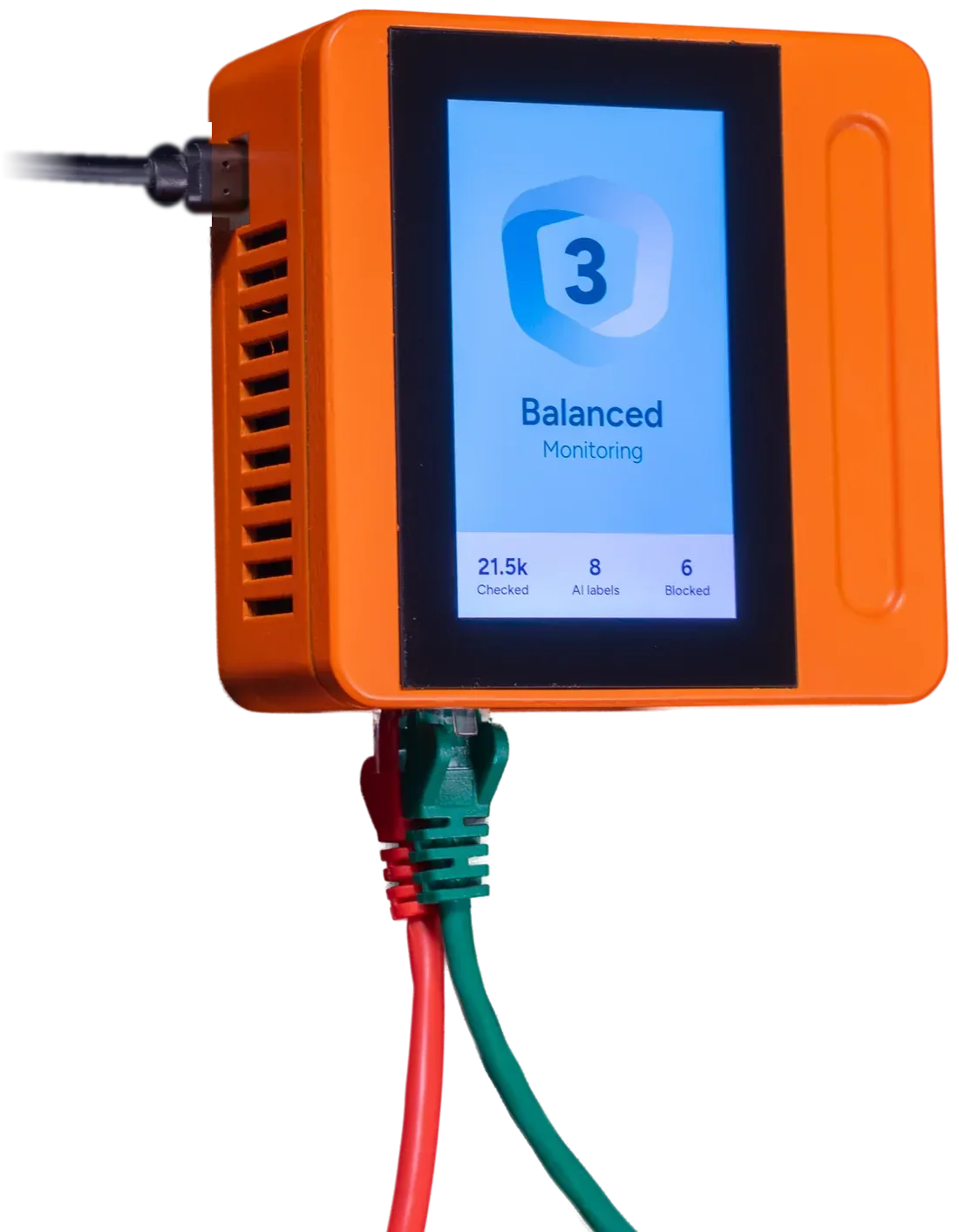
Freehold is no data marketplace and no data broker: no data is bought or sold. It collects no data and stores none. It replaces no record, so the retention obligations of whoever holds the data are untouched. The hardware comes from a partner, and is one of the places the Hub runs.
The state of play
Freehold Works is a company being incorporated, planned for October 2026. Until then the founders act in their own names.
European patent application 26202295.7, Improved authentication for processing requests, was filed on 1 September 2026 with fifteen claims and four inventors, drafted and filed by Patentales in Ghent. The intellectual property is held by the four co-inventors jointly, three of whom are the founders, each in equal part, and is licensed to the company.
The Hub runs today on Semek, a working prototype developed by Freehold's Products lead. No funding round has closed and there are no figures to disclose.
Facts at a glance
| Name | Freehold, the brand. Freehold Works, the company being incorporated. |
|---|---|
| What it is | An ecosystem in which data stays put and only answers leave. |
| Baseline | Insights, never data. |
| Patent | European application 26202295.7, filed 1 September 2026, fifteen claims, four inventors. European patent pending. |
| Working prototype | Semek, developed by Freehold's Products lead. |
| Contact | hello@freehold.works |
About Freehold Works
Freehold Works is a company being incorporated that builds the Freehold Insights Ecosystem, in which data stays where it is. A question travels to the data, the algorithm runs on the spot, and only the answer leaves, carrying a signed label recording provenance, permitted use and validity period. The underlying technology is the subject of a European patent application filed on 1 September 2026.
Also in Nederlands, Français and Español. This page carries no figures, no customer names and no forecasts, because there is no concluded business yet to base them on.